

By Grace Adepoju
Usually, a week does not go by on the popular social blogging platform X—formerly known as Twitter—where the major factions of Homo sapiens don’t get into a war about who does what and who doesn’t.
It is usually intriguing to watch if you’re not in the sights of the firing squad. On the popular social media platform, people say their opinions and stand by them, irrespective of the heat being thrown at them, and it seems to be an unending battle that would span generations to come.
The Merriam-Webster dictionary describes gender as an identification as a man, a woman, or something else and association with a (social) role or set of behavioral and cultural traits, clothing, etc.; a category to which a person belongs on this basis.
In the past, the definition of gender was set, rigid, and properly highlighted. It was certainly black and white. However, in this day and age, conversations surrounding gender have evolved into concepts that champion confusion expressed through the colors of the rainbow. Since the time when the expression of gender became one that demanded equal rights and opportunity, gender definition has lost all sense of normalcy.
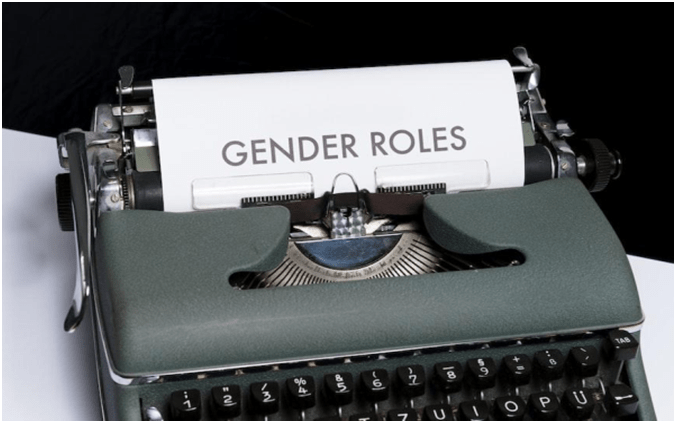
Gender roles are expectations of society that dictate what behaviors and attitudes are considered appropriate for a person based on their biological sex. Gender roles in the past were much more rigid, where men and women had specific responsibilities assigned to them based on their gender. For example, men were expected to be the main providers for the family, while women were expected to stay home and raise the children.
While there are similarities between gender norms and gender roles, the distinction between them is that gender roles are the specific tasks and responsibilities that are typically associated with a certain gender, such as men being the primary providers and women being the primary caregivers. Gender norms are the expectations and assumptions that are placed on individuals based on their gender, such as the expectation that men should be strong and masculine and that women should be feminine and emotional.
Limitations of gender roles happen when individuals are limited in their ability to express their genders in ways that don’t conform to the expectations of society. For example, a man may feel pressured to conform to the gender role of being the provider and protector, even if that’s not in line with his own interests and identity. A woman may also feel pressured to conform to the gender role of being nurturing and submissive, even if that doesn’t feel true to her. Meanwhile, individuals who were free to express their gender identity in a way that felt authentic to them experienced improved mental health and well-being.
A study published in the journal American Psychologist found that individuals who felt pressured to conform to traditional gender roles experienced higher levels of anxiety and depression, lower self-esteem, body image issues, and eating disorders. Those who did not feel pressured to conform to traditional gender roles did not experience anxiety or depression.
The 1960s and 1970s began to experience a cultural shift as women started becoming part of the workforce and traditional gender norms were challenged. This was the period when the women’s liberation movement was established. It called for equality between men and women and advocated for more opportunities for women outside the home. In the 80s and 90s, there was a push for more equality in parenting. Fathers were encouraged to actively contribute to raising their children. That marked the inception of “stay-at-home dads,” which is now common.
In the 21st century, the focus on gender has been that gender is no longer binary, gender fluidity is now encouraged, and there are no longer fixed gender roles. Traditional gender roles and norms are now being challenged by people who have taken an interest in exploring their gender identity and made decisions to express their gender identities.
Gender equality has made progress, but there are still challenges that need to be addressed. Challenges like situations where women still earn less than men on average and a significant lack of women in leadership positions. Despite these challenges, there is still hope that continuous and deliberate efforts to promote gender equality will lead to a more equal society.
Gender roles have impacted the mental health and well-being of individuals. Various studies have shown that gender roles can and have had a significant impact on an individual’s self-esteem and overall well-being. Traditional gender roles and norms can create unrealistic expectations and pressure to conform to societal norms, leading to feelings of inadequacy or failure.
For example, society demands that a woman is not expected to be single at thirty years old, a woman is supposed to have given birth a year after marriage, a man should not cry, etc. Today, traditional gender roles based on biological sex that have been assigned to individuals are no longer relevant to people’s lives. This is basically because gender roles are social constructs and can limit or harm those who are not able to fit into them. It is important to encourage flexibility and individuality when it comes to gender roles and how people express their gender.
Society should move away from being rigid and restrictive about gender roles and norms. Instead, a more flexible and inclusive understanding of gender should be encouraged and embraced.
Men and women in households should be able to express themselves. This would allow for more diversity and expression of gender roles. Honest and open conversations should be had where people are encouraged to challenge traditional gender stereotypes. Inclusive representation of gender in the media should be encouraged.
As much as it is fun to wage gender wars on X, we need to move beyond the continuum of banter every two market days. Seeing as the concept of gender and all that is attached to it would continue changing and evolving, it would get to a point where the concept would totally be done away with and become non-existent.
 OBAFEMI AWOLOWO HALL PRESS
Leave a comment