
By Rihanat Adekola
Admission into tertiary institutions is seen as a ticket to a life of a dream come true; better opportunities and better life for students born into a low-income family. The primary reason why an average individual apply to a federal school is because that’s the extent their capabilities can cater for. They want to be successful regardless of their birth circumstances, they want to be educated perhaps to leave poverty behind and not to end up in the auxiliary class. What’s left for such an individual when higher education now require going hungry when hunger is not part of the requirement to be a student?
Part of what keeps Tade going when the whirl of stress is blowing her left and right is when she’s well stocked in terms of foodstuffs. After a chaotic day of marathon lectures, Tade rushes down to her hall of residence to make herself a meal, sumptuous enough to relieve the stress and tension in her. This has been Tade’s state in the past two sessions she has spent in the course of her academic pursuit.Now, in her third year in school, it’s no longer the case. Food inflation has posed serious threats to her availability of food stuffs compared to the previous sessions. Tade’s foodstuffs have gotten to the point of drawing a plan on how to utilise it. According to Tade, the motivation cooking provides her after a long day of classes has now reduced.
Food inflation refers to the persistent rise in the increase of food prices. When inflation goes up, the purchasing power; the extent it can be bought, goes down. It is equivalent to the fact that you need more money to purchase the same amount of food item. Food inflation is perceived to be caused by weather conditions, insecurity, increase in demands, supply chain disruption, cost of production, etc. Food inflation is now a social problem in Nigeria. It has become a battle in every household in Nigeria.
According to the latest data from the national bureau of statistics, Nigeria’s inflation has increased from 33.95% in May to 34.19% in June 2024. The notion of food inflation has been seen to have adverse effects in the lives of citizens, specifically low income earners and students from poor backgrounds.
Food insecurity is one of the problems students face on university campuses. Some Students do not have access to nutritious foods that meets food preferences and dietary needs for an active and healthy life style. Food poverty is common because most students do not have access to quality foods. Milk, meat, fruits, etc are examples of foods experiencing inflation making most students unable to afford them, causing them to consider other alternatives, in most cases, less healthy foods. They often result to the consumption of highly processed foods, high in salts, sugar, and fats because they are considered cheaper compared to foods with nutritional quality whose effects might not become evident now for the lucky ones but later for both the lucky and unlucky ones.
Food inflation is the driver of food insecurity leading to food fraud which involves substandard products. Some food vendors use unhealthy alternatives in their course of making food items for the students. Which can take the form of deliberate addition of colours and preservatives into food so as to aid availability of cheap food to students.
It is unfortunate that students with low income or perhaps, low allowance often fall victim of this challenge because of the increase in price of foods. A large percentage of their money is allocated to food which most time, makes them subjected to the dilemma of choosing to buying school essential supplies and going hungry or the other way round. At times students keep an eye out on free food on campuses, attending events which might be of no use to them and because of item 7, some rely on false relationships or go on a date with strangers hoping to get food there, some choose to take poverty naps, forcing to fall asleep to avoid cooking until a later time and ignoring the hunger pangs in their stomach. Running out of food which leads to hunger and inability to afford balanced meals, causing illness due to dietary inadequacy are part of the problems affecting the academic performance of these students. Attending classes on empty stomach and eating unbalanced foods also leads to low concentration during which automatically affects the academic performance of these students.
It was stated in an interview with a food vendor who will be anonymous that “we understand that we are selling to students and some students are not financially buoyant enough to afford three meals a day. In fact, I commend those that still cook in their hostels because kerosene is now expensive. Unfortunately, it isn’t easy for us either and I can’t cheat the students because I also have kids who are students in their respective schools and I believe in the law of karma. The cost of things makes it seems like we are cheating students but it is not our fault. I use pepper of almost one thousand to cook not to talk of other foodstuff I’ll be needing. Where’s the gain then? Normally, any students that purchase food of one to two thousand in one sitting is supposed to be filled up due to their limited income but the state of the economy opposes that”.
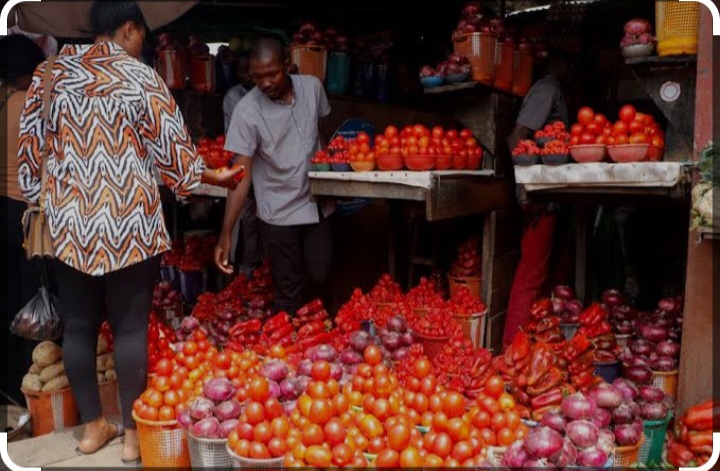
In an interview with a market woman who sells pepper at bodija market, she expressed her views bitterly about the food inflation, “when I started this business initially if I go to the market with hundred thousand naira, I’ll come back like a boss lady infact the cab conveying my goods home will be filled up with no spaces at all. But now, hundred thousand naira can only buy tomatoes and other little things. The fluctuation of prices is frustrating. Even sales is no longer like before, we are just selling in other not to stay idle at home not because of profit making anymore. I feel for students because for them to cook a pot of soup they’ll have to buy expensive pepper. How much is left to cater for other expenses, even other alternatives, atagbigbe egusi, ogbono, etc, is also expensive. How will they cope with their studies without eating well?”
Owojori Inioluwa, a 200 level student of the department of nursing in an interview, stated that, “The effect costly pepper has affected me, I used to buy pepper at least every two weeks, especially whenever I have money, but now, I have to opt to use dry pepper which is also expensive. There were times in 100 level when I make different soup, but now, I have been eating mostly egusi for swallow, no more options for me, I now stick to what I can afford”.
Elizbeth Temitayo, a penultimate student of the department of Archaeology also stated, in an interview, “Now, I don’t care if the food is balanced or not, I just want to take something in. Cost of food isn’t funny at all. I have to ration the way I eat to the barest minimum. Attending classes without anything in your tummy is not funny, and yet still afraid to get something else to eat because you have to manage the little you have. We can’t kill our parents! I’m not the only one in the university I have siblings here too. Sometimes I pity them because having different mouths to feed didn’t easy anymore”.
Food sellers in the market attribute the price increment if food to numerous factors such as level of insecurity in the northern region, cost of transportation, flooding, high cost of fertilizers and farming instruments.Lack of good and adequate diet has posed serious obstacle to students academic performance in school. It is difficult if not even impossible for a hungry man to assimilate. Cost of living is killing the living. Students now go for cheaper alternatives due to the decline in purchasing power.
 OBAFEMI AWOLOWO HALL PRESS
Leave a comment