
By Marvellous Olajide
Nigeria Centre for Disease Control and Prevention(NCDC) has recently confirmed 39 cases of monkeypox in Nigeria.
Mpox, formerly called monkeypox, is an infectious disease caused by the monkeypox virus, commonly abbreviated as MPXV, an enveloped double-stranded DNA virus of the Orthopoxvirus genus in the Poxviridae family, which includes variola, cowpox, vaccinia and other viruses. It can cause a painful rash, enlarged lymph nodes and fever. Most people fully recover, but some get very sick, most especially pregnant women and young children. The two genetic clades of the virus are Clade I (Central and East Africa) and Clade II (West Africa).
The Mpox virus was discovered in Denmark(1958) in monkeys kept for research and the first reported human case of Mpox was a nine-month-old boy in the Democratic Republic of the Congo (DRC, 1970). Mpox can spread from person to person or occasionally from animals to people. Following eradication of smallpox in 1980 and the end of smallpox vaccination worldwide, Mpox steadily emerged in central, east and west Africa. A global outbreak occurred in 2022–2023. The natural reservoir of the virus is unknown as various small mammals such as squirrels and monkeys are susceptible.
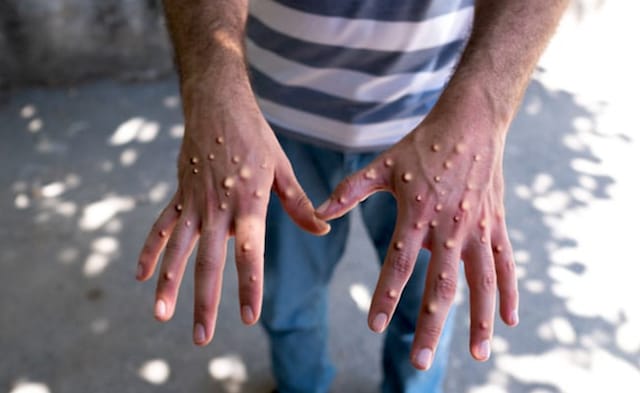
Mpox causes signs and symptoms which usually begin within a week but can start between 1 to 21 days after exposure. Its symptoms typically last between 2 to 4 weeks but may last longer in someone with a weakened immune system. The common symptoms of mpox are rash, fever, sore throat, headache, muscle ache, back pain, low energy and so on. For some people, the first symptom of mpox is a rash, while others may have different symptoms first. The rash begins as a flat sore which develops into a blister filled with liquid and may be itchy or painful. As the rash heals, the lesions dry up, crust over and fall off.
Some people may have one or a few skin lesions and others have hundreds or more. These can appear anywhere on the body such as the palms of hands and soles of feet, face, mouth and throat, groin and genital areas and the anus. Some people also have painful swelling of their rectum or pain and may experience difficulty when peeing.
People with mpox are infectious and can pass the disease on to others until all sores have healed and a new layer of skin has formed. Children, pregnant people and people with weak immune systems are at risk for complications from mpox.
Most people with mpox usually recover within 2 to 4 weeks. Actions like popping blisters or scratching sores, which can slow healing, spread the rash to other parts of the body, and cause sores to become infected and shaving areas with sores until scabs have healed and you have new skin underneath should be avoided because it can cause the spread of the rash to other parts of the body.
To prevent spread of mpox to others, persons with mpox should be isolated at home, or in hospital if needed, for the duration of the infectious period, from onset of symptoms until lesions have healed and scabs fall off. Covering lesions and wearing a medical mask when in the presence of others may help prevent spread. Using condoms during sex will help reduce the risk of getting mpox but will not prevent spread from skin-to-skin or mouth-to-skin contact.
 OBAFEMI AWOLOWO HALL PRESS
Leave a comment