
Image credit: npr.org
Elizabeth Oladapo
For many female students, life on the surface may appear normal, filled with all sorts of academic, social activities and the constant push for all-around success. However, behind all of this lies an often neglected and overlooked yet very important aspect of a female’s life: menstruation. Despite the fact that menstruation is a very important and natural biological process in females—necessary for reproduction and a sign of good health at puberty—it lies many struggles and pain females faced because of their genetic trait.
As a student, faced with academic pressure, financial struggle and then is the stomach-biting pain— Menstrual pain. Life can seemingly become a shackles. First, there is the perception that forces many female students to live a double life out of necessity: a life of silence, where pain is masked with a smile. Second, the stress. They go to great lengths to conceal sanitary products, silently frequent restrooms to change their pads for the fear of leaks, endure the discomfort that accompanied public toilets, especially when they are in school.
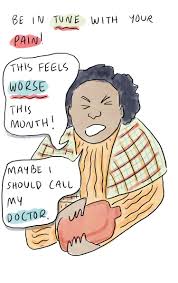
In a society where periods are seen as dirty and a girl with leaks is viewed as uncultured, menstruation is rarely acknowledged in public, and female students are left to manage their cycles in solitude. Many young females carry heavy burdens as they strive to maintain academic performance and social standing while contending with the physical, emotional, and mental demands of menstruation. Physically, some experience intense cramps, fatigue, headaches, and body aches, some are even unable to move freely due to the pain. This always impacts their concentration and participation in their day-to-day activities, and when they push themselves in order not to be left behind, it only increases their stress.
Emotionally, the hormonal fluctuations and stress that accompany periods affect their mental state, often leading to mood swings. It might not be understandable or relatable, but in reality, students are juggling academic pressures, especially at institutions like the University of Ibadan, where sheges are expected from every side, while coping with internal pain.
Another major challenge is the lack of access to essential menstrual facilities. Sanitary products may be unaffordable for many students, and the absence of clean restrooms, hygienic water, and proper disposal facilities worsens the situation. For instance, at Awo Hall, students who stay on the top floor must climb several flights of stairs to fetch water even when in pain. There is also the issue of dirty toilets which further complicates menstrual hygiene management.
Academically, the pressure is relentless. For instance, female students must juggle the discomfort of menstruation with lectures, exams, deadlines, and in some cases, absenteeism due to severe pain. Unfortunately, there is often no support or understanding from lecturers. It is unheard that you skipped a class because you are on your period. It might sound incredible but it is a real and important excuse.
As a UI student, the pressure is uncountable—not just from the university, but also from parents, peers, and broader societal expectations. Sadly, few if any measures have been put in place to reduce this burden. Socially, menstruation is still whispered about, considered a stain on societal norms. This silence that makes it difficult for females to speak up about their struggles. In some cultures, menstruation remains taboo, with certain restrictions imposed on women who are menstruating. The societal mindset creates a profound impact on mental health. It teaches female secrecy and shame because of their genetic trait.
Despite these challenges, many female students find ways to cope. Some rely on painkillers to subside the pain. They adjust their schedules and seek medical support. Others take initiative by creating clean and hygienic spaces for themselves. All these efforts highlight their perseverance and ability to adapt in difficult situations.
However, these coping strategies should not be taken for granted. Systems must be established to address these challenges. There should be increased public enlightenment about menstruation, emphasizing that it is both natural and normal. Institutions must provide hygienic facilities to prevent infections and health complications. Furthermore, schools should implement policies that allow female students to better manage their health alongside academic responsibilities.
In the end, menstruation is a natural process whose importance cannot be overstated. Female students must feel empowered to speak out and step into the light. There is no shame in being female. Be bold, be proud, and never hide who you are.
 OBAFEMI AWOLOWO HALL PRESS
Leave a comment