
Jesutofunmi Great Ayeni
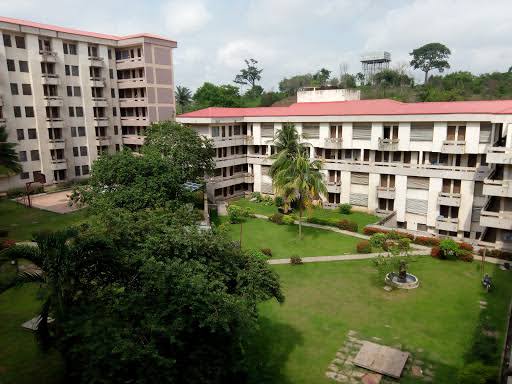
A place of residence was meant to be peaceful, but for basement residents of Awo Hall, it often felt like the opposite. Beyond the sense of isolation, the challenges of staying on the base floor are more pressing issues they face daily.
Their balcony told the story. Unlike other residents who stayed on the upper floors, basement occupants faced a view filled with litter and waste. Mosquitoes hummed constantly in the air, and every now and then, someone from an upper floor poured water down without warning. These were not rare incidents, they happened daily.
On Saturday, 24 May 2025, residents of Block A were instructed to clean their surroundings following complaints about the untidy environment. The order included basement residents. To enforce the rule, students who did not participate were fined five thousand naira each. Some affected residents claimed they were away from campus at the time, yet they returned to find fine notices pasted on their doors.
Basement residents argued that the waste in question did not originate from them. They said it came from students on upper floors who dumped refuse and poured water off their balconies. Gravity, unaware of the discomfort it caused, carried the waste straight to the basement.
Cleaning had become an unfair and repetitive task for the underground residents. They felt it was unjust to be asked to clean up messes they did not create. One cleaner assigned to the floor pointed out that the same waste kept appearing—rice, spaghetti, potato peels, eggshells, bell pepper, and plastic bags. She expressed frustration, saying she could no longer clean up after adults.
Students said the blame was misplaced. Comfort Olawale, a 300-level Sociology student, said those being punished were not the ones responsible. She described the treatment as unfair, comparing their experience to a Bible verse: when sinners were punished, the innocent felt the lashes. She added, “The fact that we were closer to the consequences did not mean we caused them. It was those on the upper floors who poured water and threw dirt, yet we faced the punishment.”
Esther, a 200-level Law student and floor representative, confirmed the frequent pouring of water from above. “Even after they cleaned on Saturday, water was poured again that night,” she said. “It also happened twice the day before. This showed that the punishment did not stop the act.”
However, the dirty environment and water pouring were not their only concerns. Looking back, the flood during the last academic session had become a growing consequence of these actions. The poor drainage system, worsened by refuse from upper floors, caused severe flooding. Students said the flood damaged electronics, food supplies, and important documents. The affected area was only the basement. Residents said this showed their suffering was human-caused—and ongoing.
The hostel code of conduct provided clear guidelines on waste disposal. Rule number six stated: “Pouring of liquids, substances, food, and remnants in sinks or over the balcony was not allowed. Therefore, use your toilets, sinks, and sieves.” Although the rule existed, students often ignored it.
Debby, a 300-level student from the Department of Arts and Social Sciences Education, raised more serious sanitary concerns. She said urine was sometimes poured from the upper floors, creating a constant stench. The effect was not just unpleasant—it was unhygienic.
“They poured urine, and it affected us,” she said. “Sometimes they poured bathing water, which attracted flies into our rooms.” She also pointed out that the bushes around the basement were poorly maintained, giving pests and rodents a place to breed.
Inside the rooms, she added, living conditions were also tough. The lack of sufficient wardrobes made it hard to keep clothes organized.
Esther mentioned that her basement room had no electricity. She depended on her neighbors to charge her phone.
Not everyone disagreed with the penalties. Fiyin, a 200-level Statistics student, said the cleanup was necessary. She believed no one should live in a dirty environment.
Another cleaner explained that when students were involved in cleaning, they gained awareness of the effort it took. But basement residents argued that this awareness was misplaced when the wrong people were held responsible. Teaching a lesson should not come at the expense of the innocent.
Comfort Olawale suggested a possible solution: basement residents should monitor and report anyone caught pouring waste or water. That way, there would be evidence, and innocent people could be cleared. Until a system like this was in place, basement residents said they would continue to suffer for actions they did not commit. They asked for fair treatment and proper enforcement of hall rules.
.
 OBAFEMI AWOLOWO HALL PRESS
Leave a comment