
By Marvellous Olajide
There is a type of exhaustion that sleep alone cannot fix. You may wake up feeling tired, attend classes without energy, and find it difficult to absorb any information from your notes. You may become irritable without clear cause, and although your body is physically present, your mind feels distant and disengaged. If you often catch yourself wondering, “What is the point?”—you may be experiencing burnout.
What Is Burnout?
Burnout is more than just stress. It is a state of physical, emotional, and mental exhaustion resulting from prolonged pressure, overwork, or chronic stress. It tends to develop gradually, slowly depleting a person’s energy and motivation until they feel emotionally drained and disconnected. Unfortunately, many individuals, particularly students, do not recognise burnout for what it is. Instead, they blame themselves, assuming they are lazy, unserious, or simply not trying hard enough.
However, burnout is a real and serious condition. For students in Nigerian universities who face heavy academic demands, infrastructural challenges, environmental distractions, and financial burdens, the risk is especially high.
How to Identify Burnout in Yourself?
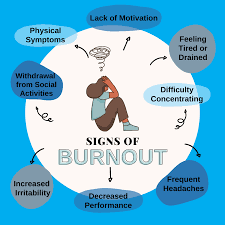
Burnout does not happen suddenly. It develops over time and can present differently from person to person. The following are some common signs that may indicate burnout:
1. Persistent Fatigue
You feel exhausted even after a full night of sleep. The fatigue is constant, and your body feels weighed down. Mental fog and a general lack of enthusiasm accompany your physical tiredness.
2. Loss of Motivation
Activities that once brought joysuch as studying, engaging with friends, or participating in class, no longer excite you. You feel emotionally disconnected from your passions and goals.
3. Lack of Engagement
You find yourself merely going through the motions of your daily routine. Tasks such as attending lectures, completing assignments, or studying are done without any emotional investment. You feel like a machine, rather than an active participant in your own life.
4. Emotional Instability
You may experience frequent mood swings or become easily irritated. Minor inconveniences trigger strong emotional responses. Alternatively, you may withdraw completely and isolate yourself from others.
5. Decline in Academic Performance
Despite putting in effort, your results begin to drop. You find it difficult to retain information or concentrate, and it feels as if your hard work is no longer yielding results.
6. Avoidance Behaviour
You start skipping classes, ignoring responsibilities, and postponing assignments. This is not due to carelessness, but because you genuinely lack the energy to engage.
A real-life example is Blessing, a 300-level Pharmacy student. Once among the top students in her class, she was diligent, attentive, and supportive of her peers. However, she began to notice significant changes. “I was always tired,” she explained. “I would lie on my bed for hours, thinking about everything I needed to do, but I just could not get up. I started missing classes. I stopped replying to messages. I felt like a failure.” Her experience was not caused by laziness or arrogance. It was burnout.
Why Nigerian Students Are Especially at Risk
Academic life in Nigeria is uniquely challenging. Students are often expected to master extensive materials in a very short time. Unreliable electricity makes studying difficult. Lack of basic amenities, such as clean water, increases daily stress. Many students juggle academics with part-time jobs, religious commitments, family expectations, and social obligations. There is immense pressure to achieve success quickly—often before the age of 25.
These overlapping stressors accumulate over time. Without intervention, they can lead to complete mental and physical exhaustion.
Steps to Manage and Recover from Burnout
Burnout is not a sign of weakness or failure. Rather, it is a signal from the body and mind that rest and recovery are urgently needed. Here are some strategies to begin healing:
1. Intentional Rest
Rest should go beyond sleep. Allow yourself guilt-free breaks. Watch a comedy, listen to music, spend time outdoors, or simply do nothing. Let your mind and body truly relax.
2. Reconnect with Your Purpose
Burnout often leads to a loss of direction. Take time to reflect on your personal goals and reasons for choosing your course or career path. Conversations with mentors or inspiring individuals may help reignite your passion.
3. Establish Boundaries
Recognize that you cannot do everything. Decline extra responsibilities when necessary. Limit time on social media and avoid interactions that are emotionally draining.
4. Speak Up
Talk to someone you trust—a friend, mentor, counselor, or therapist. Expressing how you feel is a crucial step towards healing. Seeking support is not a weakness; it is a form of strength.
5. Simplify Your Tasks
When overwhelmed, break larger tasks into manageable steps. Instead of aiming to read five chapters at once, focus on reading five pages. Celebrate small accomplishments along the way.
Burnout is a serious but manageable condition. If you are experiencing it, know that you are not alone and that recovery is possible. Nigerian students operate within a demanding system, often without adequate support, yet continue to strive for excellence. Your mental health is one of your most valuable assets—not just in academics, but in every aspect of life. Recognizing the signs of burnout and taking steps to care for yourself is not only necessary but essential. Prioritize your well-being. Pause. Reflect. Breathe. Then begin again—stronger and more aware than before.
Image credit: Aspen University
 OBAFEMI AWOLOWO HALL PRESS
Leave a comment