Rianat Ademola
26 years ago, democracy became a thing in Nigeria. What followed were bloodbath elections that elected bad leaders into power, election violence, corrupt politicians who spent millions to get tickets, and freedom of speech attacked. This is the tapestry Nigeria’s democratic state has witnessed.
Today again, as Nigeria celebrates democracy amidst inflation, increased poverty rate, insecurity, tribalistic wars, the sad truth is ignored. The frailties of Nigeria’s democracy need to be addressed. The arch is shaking. It is heading for demolition.
The power of democracy lies between the leaders and the led, yet that power has been downplayed. The leaders who are meant to be seer-like, hero-like, are unaware or indifferent to the suffering of the citizens. If the leaders keep ignoring the people, then what is the concept of accountability that democracy preaches?
Democracy is built on the idea that all people have basic rights, like freedom of speech, religion, and assembly. Yet, to say something in Nigeria is risky. It is a grave sin to speak and upset those in power. Omoyele Sowore was arrested in 2019 for calling for a peaceful protest. The #EndSARS protesters at Lekki Toll Gate were met with bullets instead of answers. These are the prices people pay for speaking in a system that claims to be democratic.
On this day again, the presidential speech will be read, filled with embellished vocabulary that is detached from Nigerians’ sufferings. There are many pressing issues to address. It should not be just a day where the president speaks in his baritone voice. There is no need for interpreters to say Nigerians are suffering. It is bare in their eyes. It can be seen from the presidential podium, where past heroes are celebrated without consideration of present mistreatment.
The decline in education, the failing health sector, and the rising cost of living are enough evidence that the government fails in its democratic duties. These conditions paint a troubling picture behind the celebration. Democracy is losing its essence in Nigeria.
In the last election, voter turnout was about 27 percent. The 2015 election that brought President Buhari to power saw a 54 percent turnout. In 2019, it was around 35 percent. People are losing interest in voting because they do not believe their votes matter. When those they vote into power do not care, it becomes pointless to carry their fates to the polling unit. As long as these things remain, what is the point of celebration?
True democracy requires true governance, and that is what Nigeria is lacking. The rose-tinted history of the 1993 democratic election between Moshood Kashimawo Olawale Abiola of the Social Democratic Party and Bashir Tofa of the National Republican Convention is remembered as one of Nigeria’s most credible elections—peaceful and orderly. This is what President Muhammadu Buhari referred to in 2018 when he declared June 12 as the nation’s Democracy Day.
That rose-tinted glass of history is used to make Nigerians celebrate the free and fair elections of the past, yet nothing is done to put those principles into practice. The 1993 election showed what democracy could be if its values were respected. It is a benchmark to keep in mind when conducting elections—a call to end every four years’ bloody rituals and ethnic rivalry.
The binary between the government and citizens should not be the only thing that defines Nigeria’s democracy. What should define it is free and fair elections, accountability, transparency, equal participation, and protection of rights. These rights are not optional; they are the foundation upon which democratic societies stand.
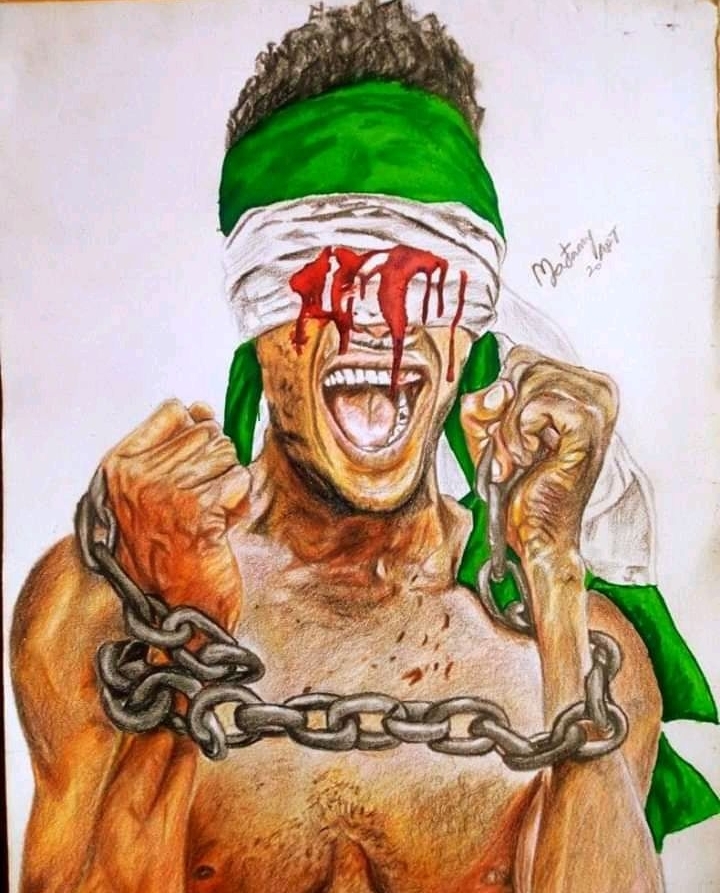
Democracy is handcuffed. Free and fair elections are missing. Freedom of speech and accountability to the people are lacking. Power remains concentrated in the hands of a few, weakening democracy and blocking true development. True democracy will only exist when practiced sincerely. That is when democracy will truly be worth celebrating in Nigeria.
Democracy should not be a ceremony but a lived reality. It requires fair elections, respect for human rights, transparency, and the will of the people. Until then, Democracy Day remains a reminder of what Nigeria aspires to be, not what it is.
Image Credit: Madamy Art
Democracy Day Without Democracy: A Nigerian Reflection
 OBAFEMI AWOLOWO HALL PRESS
Leave a comment