
By Elizabeth Oladapo
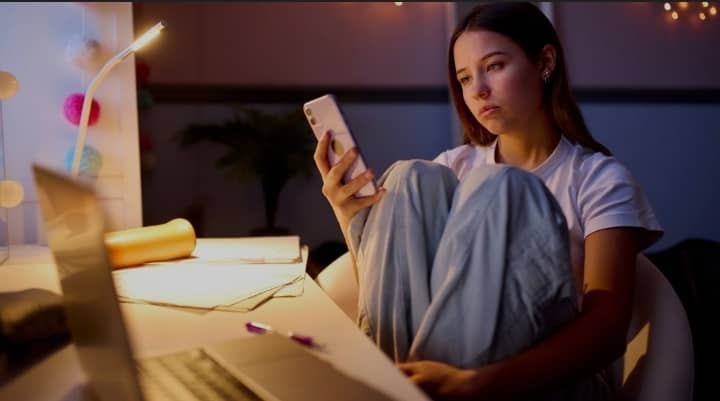
At 12 a.m. on a Monday morning, imagine stepping out to urinate and hearing loud laughter and noise from the phone of the neighbor next door, scrolling through TikTok with a lot to do the next day. This has become quite the norm in the lives of many students. The number of hours that an average student spends on their phones, laptops, iPads, or even tablets has become alarming. Studies have shown that youths spend an average of 7.5 hours per day on screens. That is more than a quarter of a whole day.
Social media has become a lifestyle for students. Platforms like TikTok, Instagram, X, WhatsApp, YouTube, and Snapchat have become spaces to showcase themselves or derive joy and entertainment.
Social media helps in academics, no doubt. Its role cannot be overemphasized. It helps students with research, study group sessions, and many other academic activities.
It is also important in other areas besides academics. It helps students stay connected with family and friends. It shares information about opportunities like scholarships, internships, and creative projects that can be a stepping stone in life. Many people have used these opportunities to travel abroad, further their studies, or even relocate. Others have secured good jobs from reputable companies and industries through information found on social media.
However, there is always another side to the coin. Many debates have been held comparing the harm and benefits of social media, especially in today’s society.
Many students develop the habit of procrastination and distraction because of social media. They prefer spending time on Instagram rather than investing time in their studies and self-development. This affects their academics. They reduce study time, lose concentration, and find it hard to focus in class. Their eyes are glued to their phones while the lecturer is explaining, and they leave lectures without learning anything.
Sleep deprivation is another consequence of social media use. You see a student with a test the next day still awake at 2 a.m. The assumption is they are reading, but you soon realize they are chatting on WhatsApp. Even without an upcoming test, staying up late scrolling online has a heavy toll. The importance of good rest cannot be overemphasized, yet students show up to class with tired eyes, not from night reading but from dancing for TikTok videos. Reels, movies, and endless videos constantly divert focus.
Then there is social comparison. Students develop fear, not fear of God, but the fear of missing out. Low self-esteem grows. They compare themselves with celebrities, fantasize, and develop unrealistic expectations. Some even create delusions, like imagining a celebrity coming to Nigeria to marry them. Anxiety starts to grow, and students begin to act differently, behaving in ways they normally would not. From there, addiction creeps in. They become obsessed with notifications, follower counts, and online validation. They cannot go a day without spending hours on social media.
People often neglect the full impact of social media. It extends beyond comparison or addiction. Health is affected as well. Too much of anything is harmful, and social media is no exception. Long hours online affect posture, eyesight, and even physical fitness. Online friendships replace real-life connections. Communication with close friends and family lessens while relationships with online friends deepen. Weakness, headaches, and posture problems arise. Sleep quality and academic productivity also decline.
Lecturers sometimes seize multiple phones during class just to make students pay attention. Yet even then, students are more focused on comedians on Instagram than the lecturer in front of them. Participation in class drops, and when lecturers ask, “Do you understand?” the answer is often “No.” How can students understand when they were distracted?
Some students multitask between studying and using social media. Thanks to Android and iPhone features, many are now experts at running two apps side by side. Instead of focusing, they split their attention between chatting on WhatsApp and attempting to read. Yet these same tools could enhance their education. YouTube tutorials and online study forums are powerful tools if used well.
Talk to students, and you will hear things like, “I must post twice a day,” or “I can’t go a day without Instagram.” One person even said, “How do you survive without social media in a day?” But what about life before social media? Have we ever thought about how people survived and excelled back then?
I remember a time I had an important meeting at 5 p.m., but I was on TikTok. I kept postponing getting ready until it was exactly 5 p.m. I rushed out, forgot things, arrived late, and missed important discussions. That is an example of how excessive screen time and social media can disrupt life.
Psychologist Dr. Megan Moreno highlights how social media’s constant comparison is dangerous and damages students’ self-esteem and mental health. Dr. Jean Twenge, a clinical psychologist, has also shown that social media contributes to depression, anxiety, and social isolation among adolescents.
Research from a university in the Arab world paints a clear picture. Among 300 students surveyed, 97 percent use social media, but only 1 percent use it for academic purposes. Thirty-five percent use it mainly for chatting, 43 percent to pass time, and 57 percent admitted being addicted. Over 52 percent said social media negatively affects their studies, 66 percent felt more drawn to social media than learning, and 74 percent spend most of their free time online. This makes you wonder. In the days before social media, people survived, excelled, and these issues were far less common.
This is a call for students to understand that mismanagement brings damage. When you misuse anything, it does more harm than good. Social media is no exception. We cannot ban or stop people from using it, as its benefits are many. However, we can learn balance. Social media should entertain and inform us but not define or demean us. Students should consider setting screen limits, taking digital detox breaks, and using productivity apps. We can control how we use social media or it will control us.
Hooked and Addicted: The Toll of Excessive Screen Time on Students
 OBAFEMI AWOLOWO HALL PRESS
Leave a comment