
By Hadiza Usman
The University of Ibadan campus is a place defined by motion and noise. It is the steady hum of conversation in lecture halls, the hurried footsteps of students racing to a class, the boisterous laughter echoing from a hostel common room. It is a world of constant interaction, a shared space where thoughts and ideas are meant to be exchanged freely. Yet, amidst this vibrant, communal energy, another, equally vital world exists in a quiet, unassuming way. These are the campus’s sanctuaries of thought, the hidden nooks and forgotten benches where students go not to find others, but to find themselves. These places are not on any official map, but they hold an immense, personal significance, proving that “Solitude is as needful to the imagination as society is wholesome for the character.”
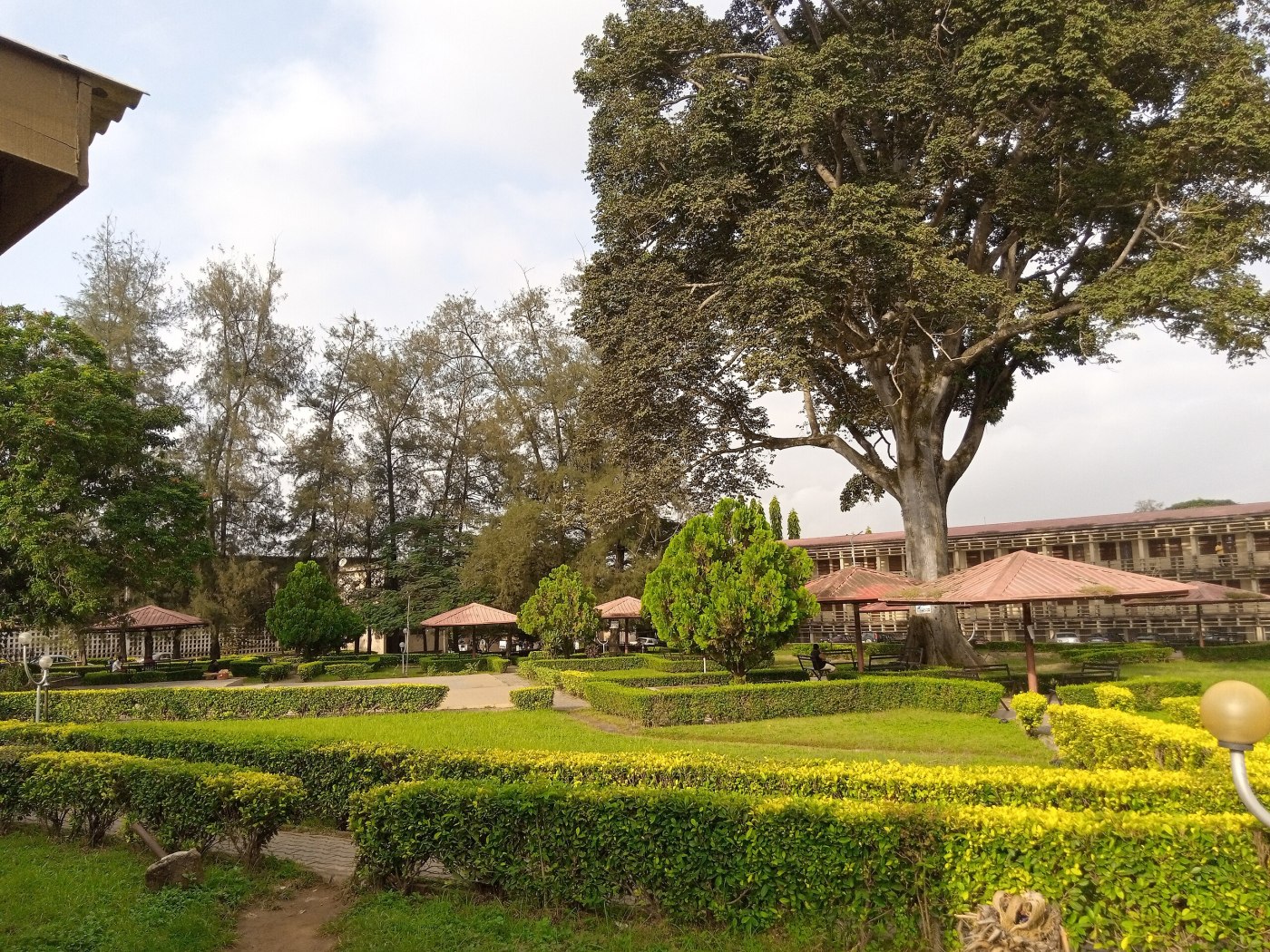
These quiet corners are not for the lonely, but for the contemplative. They are the spots where a student can escape the overwhelming social and academic pressure, a place to simply be. For some, it is a particular bench under an old, sprawling tree near the Faculty of Arts, its gnarled roots providing a natural backrest. Here, a student might come to read a novel that has nothing to do with their coursework, to sketch in a notebook, or simply to watch the world go by without feeling the need to be a part of it. The wind rustling through the leaves, the distant chatter of birds, the gentle light filtering through the canopy—all these elements conspire to create a moment of stillness, a mental reset button that allows for a deep breath and a clear mind.
For others, the sanctuary lies in the very heart of the campus’s intellectual engine: a secluded corner of the Kenneth Dike Library. While the main reading areas buzz with focused energy, there are tucked-away spots on upper floors or in obscure aisles where the silence is absolute. A student in such a nook is not just escaping the noise; they are immersing themselves in the very essence of knowledge, a physical and psychological retreat that allows for a different kind of thinking. Here, a research problem that seemed insurmountable might find a sudden solution, a confusing theory might suddenly click into place, or a creative idea, born from the depths of a quiet mind, might finally take shape. This kind of productive solitude is a cherished part of the academic journey, an understanding that sometimes the greatest breakthroughs happen when you are completely alone with your thoughts.
The sanctuaries are often as personal as the students who seek them out. A medical student might find their peace on a quiet walkway behind the College of Medicine, walking back and forth until the anxiety of an upcoming exam dissipates. A final-year student might seek out a quiet spot in the Love Garden, a serene and central place close to the bustle of cafeterias and walkways. They come not to socialize, but to reflect on their journey, to gain perspective on how far they have come and what lies ahead. For them, this simple act is a ritual of self-care, a way to process the weight of their final year without the pressure of a deadline. These spots are not built to be retreats; they become them, imbued with personal meaning through the moments of introspection they facilitate.
The power of this intentional solitude lies in its ability to nurture the inner world. In a culture of constant connection and digital noise, the act of purposefully withdrawing to a quiet space is a revolutionary act. It is where students can truly connect with their deeper selves, sorting through emotions, clarifying goals, and understanding their own values. This is where creativity flourishes, where solutions to problems emerge, and where the mind, unburdened by external distractions, can truly think freely. It’s an understanding that “All great and honourable actions are accompanied with great difficulties, and must be both enterprised and overcome with answerable courage.” These quiet moments of reflection are where that courage is born.
Ultimately, these quiet corners are essential to the well-being of the UI student body. They are not a sign of loneliness, but a testament to the students’ self-awareness and maturity. They provide a crucial balance to the communal, demanding nature of university life, offering a necessary psychological retreat. They remind us that while the campus is a place of shared experiences, it is also a collection of individual journeys. In a place of thousands, the most profound journey often begins in a moment of solitude, under a quiet tree, in a forgotten nook of a library, or on a simple bench, where the only conversation is the one we have with ourselves. These are the sanctuaries that prove that even in the busiest of places, true peace is always within reach.
 OBAFEMI AWOLOWO HALL PRESS
Leave a comment