

By: Onyinyechi Obike
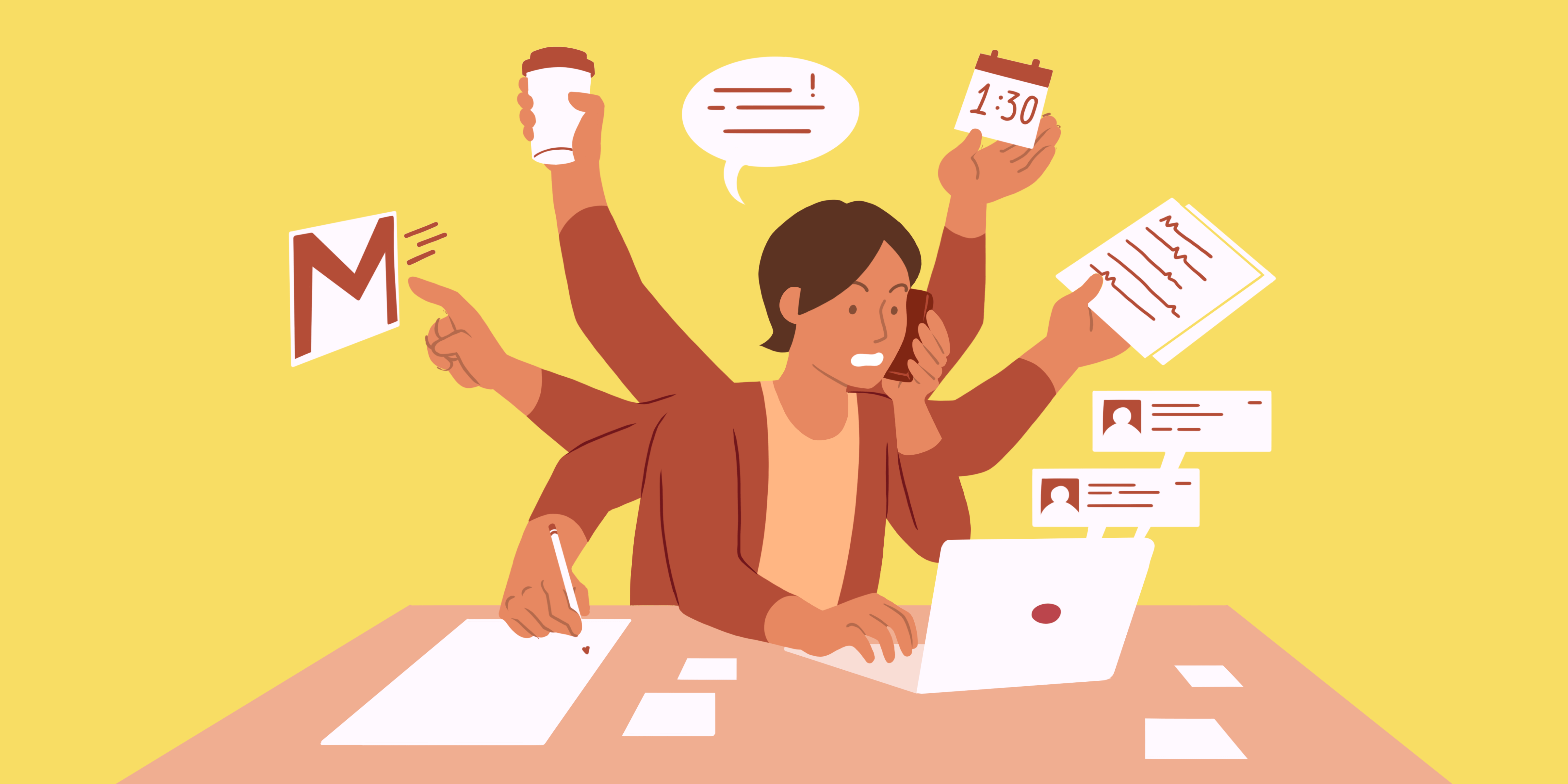
The life of the average student was not designed to be a walk in the park. Between juggling academics and having a social life, along with the myriad of school activities slated each semester; your overall well-being may come crashing down if precautions are not taken. For context, according to the University of Ibadan’s academic calendar, the 9th week of lectures is upon us, causing many students to wonder how time flew.
With the pressures of the fast-approaching exams and tests and the mountains of assignments and tasks to be done, there’s every tendency for students to get overwhelmed and even reach their breaking point. More so when you’re a student involved in several activities and responsibilities like side hustles, religious engagements, associations and clubs, and leadership positions, the skills of multitasking and discipline must be utilized to keep your head above the water.
Multitasking, according to the Oxford dictionary, is “the practice or capability of handling more than one task at the same time”. It means handling numerous activities and responsibilities simultaneously. For certain categories of students, the ability to juggle and multitask comes easily to them. But in the same vein, others are not skilled with this ability and can only concentrate on one task at a time. Undoubtedly, multitasking is an important skill; however, it’s undeniable that it does have its disadvantages.
When you have a lot on your plate, more often than not, you tend to forget key aspects of your life, such as your social, physical, mental, and social well-being. These things are an integral part of a person’s life. A major demerit of multitasking is the gradual accumulation of stress from multiple tasks. This accumulated stress may lead to behavioral, emotional, physical, and psychological effects like drinking or smoking, becoming antisocial, panic attacks, insomnia, fatigue, depression, and a lot more, which is why the best remedy for handling the side effects of multitasking is stress relief.
Now, follow through as we unravel different means and ways with which you can relieve stress:
1. Exercise
First off, it’s not what you’re thinking, and you don’t necessarily get a gym membership. Exercise is any activity that gets your heart racing, increases your adrenaline, and helps you stay fit (p.s., watching a horror movie to get your heart racing isn’t a form of exercise).
Exercise ranges from taking a stroll around the campus, riding a bike, doing a few jumping jacks, jogging, skipping, etc. Some exercises, like aerobic ones and breathing-centered exercises like yoga also help to increase your endorphin level and make you happier. You can surf the internet to find the perfect exercise that isn’t too strenuous but certainly suits you.
2. Time Management
La Bruyere (1688) once said that “those who make the worst use of their time are the first to complain about its brevity.” Most people complain that there’s not enough time in a day, making time management of great significance. Everyone on earth has the same 24 hours, and how effectively you use them is solely dependent on you.
You can start managing your time by first doing away with the P-factor—procrastination. Procrastination is not just the thief that steals your time; it also robs you of your rest and sanity. The more you pile up those tasks, the more stress you accumulate. Endeavor to do those assignments and chores as they come because your ‘I will do it later’ bin is already filled up.
Aside from this, learn to be more conscious of your time and make the most of the in-between times. In-between times are the intervals between one action and another. Those minutes and hours where you happen to do nothing, instead of allowing time to whirl away, be intentional about how you want to spend your time.
Likewise, start your day with a plan or a to-do list. Write down all you need to do, categorize them into urgent and less urgent, important and less important, and sort the order in which they’ll be done. This will help you focus on what needs to be taken care of and even make allowances for those sudden tasks that come up.
3. Adequate sleep
The mantra on the lips of most Uites is, “How do you expect me to sleep when there’s so much to be done?” Well, if a survey were to be run on who is more efficient between a sleep-deprived person and a well-rested person, the well-rested person would have a higher scale.
Getting good and adequate sleep every day cannot be overemphasized. A minimum of 6 hours of sleep is possibly achievable despite all the workload that seems to burden your back. Sleeping adequately helps boost your brainpower and memory, increase your mental energy, and reduce the risk of depression.
You’ll accomplish your goals better when you’re well rested, as you’ll be more efficient, less irritable, more concentrated, and more coordinated.
4. Relaxation
You don’t have to break your piggy bank to get the best relaxation. Relaxation isn’t necessarily taking a vacation; it could be spending time with friends and family, taking a warm or cold shower, watching a movie, reading a novel, going on dates, listening to music, or just lying on your bed and staring at the ceiling.
Another way to relax is to reduce your screen time and spend time with actual human beings. Make time to enjoy your environment and nature. You’ll be surprised by how much you miss whenever you are on your phone.
5. Positive Mindset
Well, the best was saved for last. Most times, the stress you feel is in your mind. It could be worrying about finances, unfinished projects, and assignments, slides to read, meetings to attend, deadlines to meet—you name it—and in some cases, failed relationships.
An excellent way to approach this type of stress is to have a positive and optimistic disposition toward everything. Surround yourself with words of encouragement and affirmations to build your confidence. It is best to stop thinking and conjuring the worst of scenarios and instead, imagine how everything will turn out wonderfully and how you will set out to do all you have proposed to do.
You can, and you will. Be the drive to success that you need. There’s so much you can do and a lot of potentials inside of you to be unleashed, but it all starts with taking out those stress-prone thoughts in your head and filling the void with optimism and hope.
In conclusion, you need to keep an open mind towards the tips that have been listed above. They may seem trivial, but their effects cannot be overemphasized. Endeavor to be diligent in executing these remedies for relieving stress, and try not to overwork yourself. Remember to maintain balance while multitasking and you’ll be astonished by how fulfilled and stress-free you’ll be.
 OBAFEMI AWOLOWO HALL PRESS
Thank you Onyinechi,
These are very helpful tips
LikeLiked by 1 person
This is a lovely content ,I learnt a new tactic to battle multi tasking today.
LikeLiked by 1 person